
Electron | The Cosmos Will See You Now (Open Cosmos Constellation Launch 1)
Rocket Lab
Mission Status
The launch vehicle successfully inserted its payload(s) into the target orbit(s).
Mission Updates
Launch success.
Source →Both Satellites deployed.
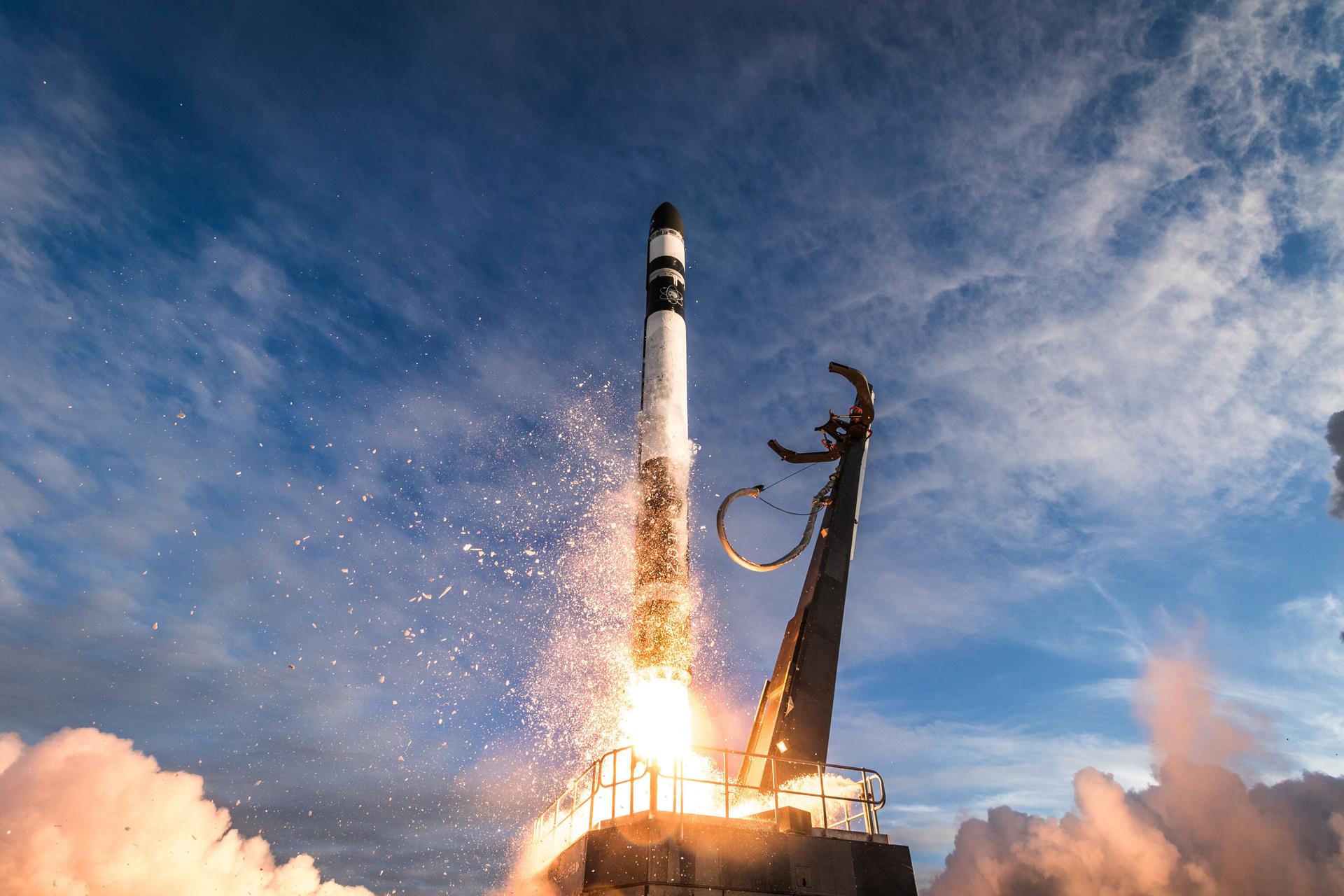
Source →Liftoff
Source →Launch pad assigned & updated launch site weather (https://x.com/RocketLab/status/2014268877421904342).
Source →Official Webcast by Rocket Lab has started
Source →GO for launch.
Source →NET January 22 per new NOTAMs, to be confirmed.
Source →Delayed due to launch site weather, new launch date TBD.
Source →GO for launch.
Source →Added launch.
Source →Mission Details
First 2 satellites (named MR-1 and MR-2) of UK-based Open Cosmos' secure LEO broadband constellation designed to provide independent and resilient connectivity infrastructure for Europe and the world, using high-priority Ka-band spectrum filings by the Principality of Liechtenstein.
Rocket Configuration
Electron is a two-stage orbital expendable launch vehicle (with an optional third stage) developed by the American aerospace company Rocket Lab. Electron is a small-lift launch vehicle designed to launch small satellites and cubesats to sun-synchronous orbit and low earth orbit. The Electron is the first orbital class rocket to use electric-pump-fed engines, powered by the 9 Rutherford engines on the first stage. It is also used as a suborbital testbed (called HASTE) for hypersonics research.