Ultime Notizie

Rimani aggiornato sugli ultimi eventi del volo spaziale.

Ultime Notizie

Igniting Roman’s Journey
NASA

Igniting Roman’s Journey

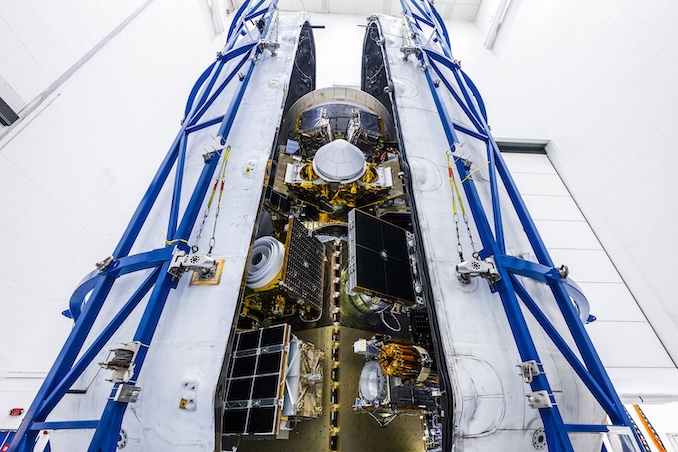
Now on a three-month, million-mile journey to its final orbit, NASA’s Nancy Grace Roman Space Telescope will soon reveal the universe’s darkest secrets. The mission launched at 7:26 a.m. EDT on Aug. 30 aboard a SpaceX Falcon Heavy rocket from Launch Complex 39A at the agency’s Kennedy Space Center in Florida. Roman pairs a large […]

Leggi di più →
Isar Aerospace Could Attempt Second Spectrum Flight as Early as 4 September
European Spaceflight

Isar Aerospace Could Attempt Second Spectrum Flight as Early as 4 September

Maritime safety notices indicate that a week-long launch window for Isar Aerospace’s second Spectrum flight will open on 4 September. On 1 September, the Norwegian Coastal Administration issued a warning outlining that rocket launch operations were expected to be conducted daily between 16:00 and 21:35 UTC from 4 to 10 September. The warning establishes two […] The post Isar Aerospace Could Attempt Second Spectrum Flight as Early as 4 September appeared first on European Spaceflight.

Leggi di più →
Galaxia Takes Next Step in Earth Observation with purchase of Simera Sense Hyperspectral Imager
SpaceNews

Galaxia Takes Next Step in Earth Observation with purchase of Simera Sense Hyperspectral Imager

Leuven, Belgium & Halifax, Canada – 3 September 2026 – European optical payload provider Simera Sense today announced that Canadian space technology company Galaxia has acquired a HyperScape100 hyperspectral imaging […] The post Galaxia Takes Next Step in Earth Observation with purchase of Simera Sense Hyperspectral Imager appeared first on SpaceNews.

Leggi di più →
Hubble's superbubble scene
ESA

Hubble's superbubble scene

This sprawling cosmic vista and subject of today’s ESA/Hubble Picture of the Month comes from the Large Magellanic Cloud (LMC). The LMC is the largest of the small galaxies that orbit our Milky Way galaxy. At just 160 000 light-years away, the LMC offers a close look at highly active stellar birthsites like the nebula shown here. This nebula is named LHA 120-N44, or N44 for short, and it’s located in the constellation Dorado.

Leggi di più →

Prossimi Lanci

Vedi Tutti →
Go for Launch

GSLV Mk II | GISAT-1A (EOS-05)

Indian Space Research Organization
Tipo Missione Earth Science
Orbita Geostationary Transfer Orbit
Pad Satish Dhawan Space Centre Second Launch Pad, Satish Dhawan Space Centre, India
To Be Confirmed

Spectrum | Onward and Upward

Isar Aerospace
Tipo Missione Test Flight
Orbita Sun-Synchronous Orbit
Pad Orbital Launch Pad, Andøya Spaceport
Go for Launch

Falcon 9 Block 5 | Starlink Group 15-24

SpaceX
Tipo Missione Communications
Orbita Low Earth Orbit
Pad Space Launch Complex 4E, Vandenberg SFB, CA, USA

Prossimi Eventi

Vedi Tutti →

Stazioni Spaziali Attive

Vedi Tutti →
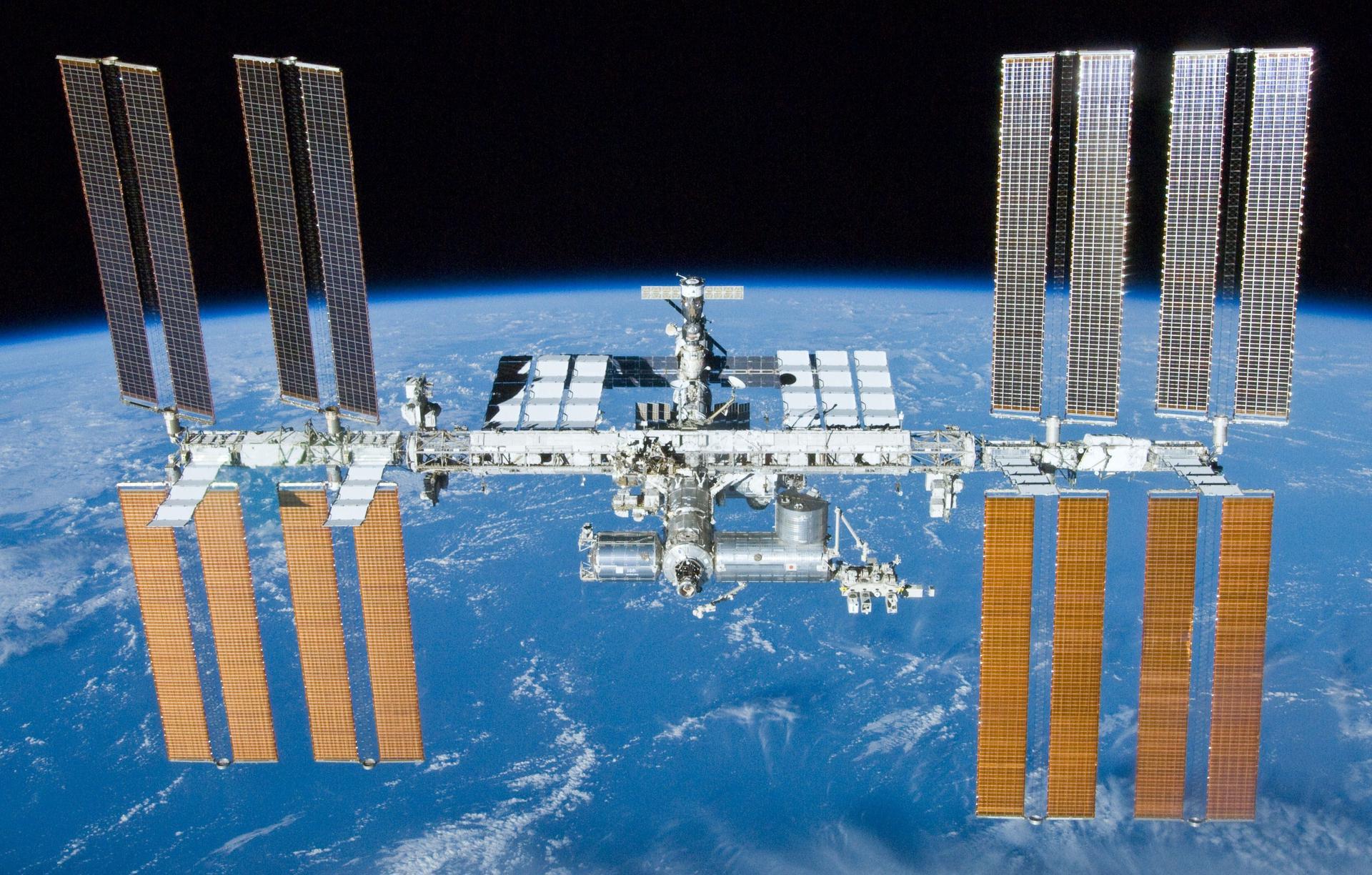
International Space Station

International Space Station

Stato: Active Orbita: Low Earth Orbit

Fondazione: 1998-11-20

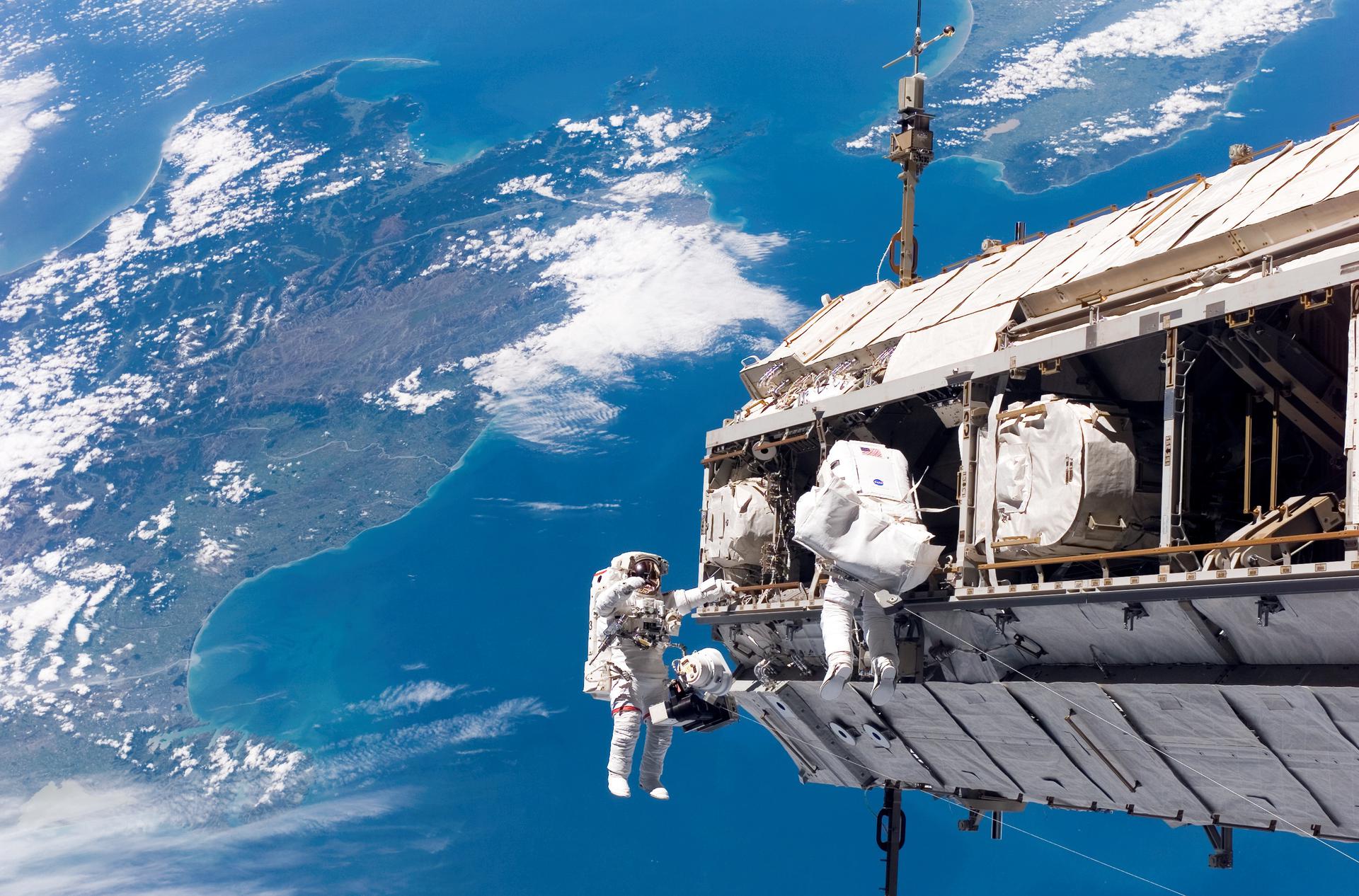
The International Space Station (ISS) is a space station, or a habitable artificial satellite, in low Earth orbit. Its first component was launched into orbit in 1998, with the first long-term residents arriving in November 2000. It has been inhabited continuously since that date. The last pressurised module was fitted in 2011, and an experimental inflatable space habitat was added in 2016. The station is expected to operate until 2030. Development and assembly of the station continues, with several new elements scheduled for launch in 2019. The ISS is the largest human-made body in low Earth orbit and can often be seen with the naked eye from Earth. The ISS consists of pressurised habitation modules, structural trusses, solar arrays, radiators, docking ports, experiment bays and robotic arms. ISS components have been launched by Russian Proton and Soyuz rockets, and American Space Shuttles.

CSAESAJAXANASARFSA
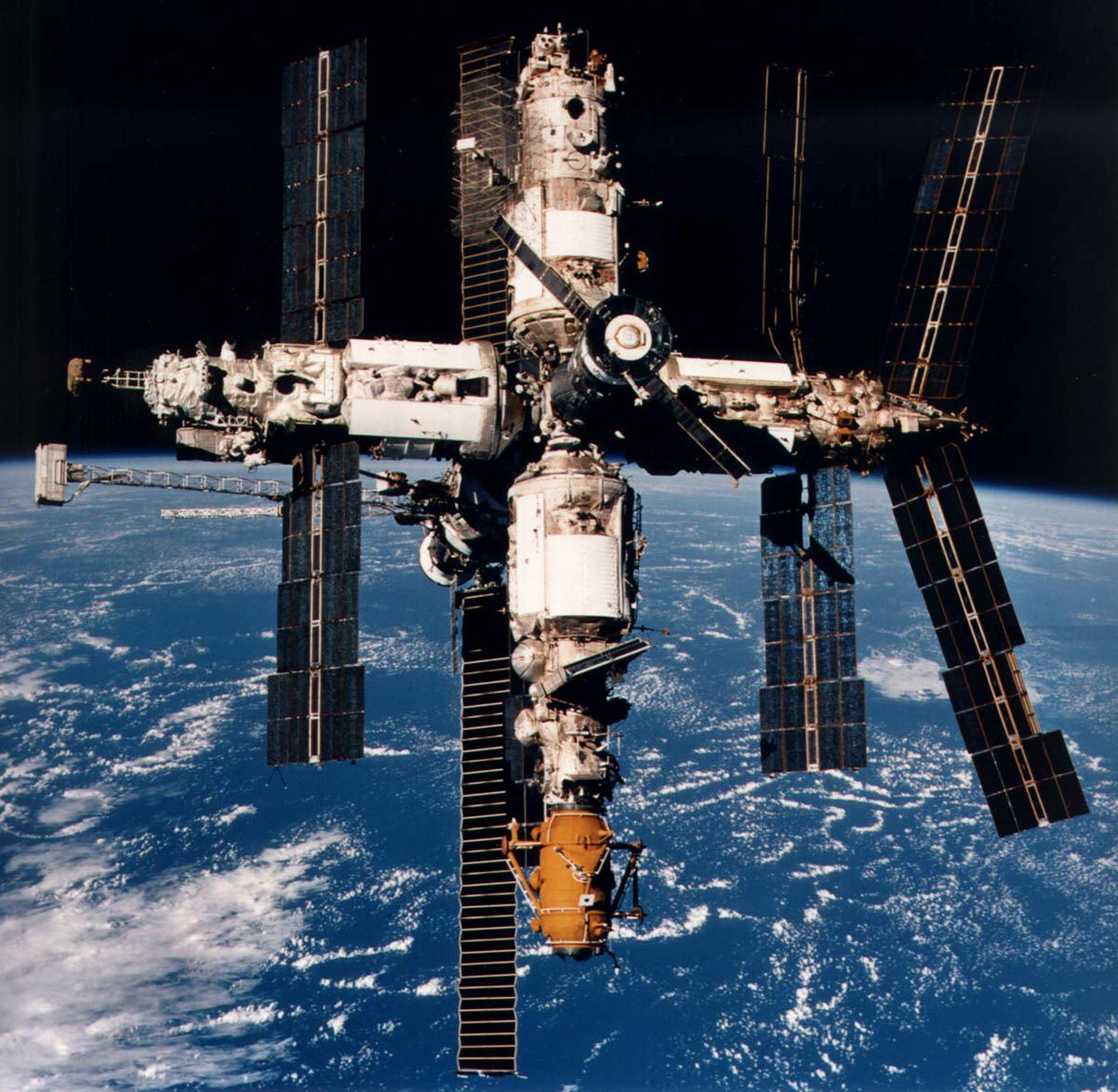
Mir

Mir

Stato: De-Orbited Orbita: Low Earth Orbit

Fondazione: 1986-02-20

Mir was a space station that operated in low Earth orbit from 1986 to 2001, operated by the Soviet Union and later by Russia. Mir was the first modular space station and was assembled in orbit from 1986 to 1996. The station served as a microgravity research laboratory in which crews conducted experiments in biology, human biology, physics, astronomy, meteorology and spacecraft systems with a goal of developing technologies required for permanent occupation of space.

RFSA
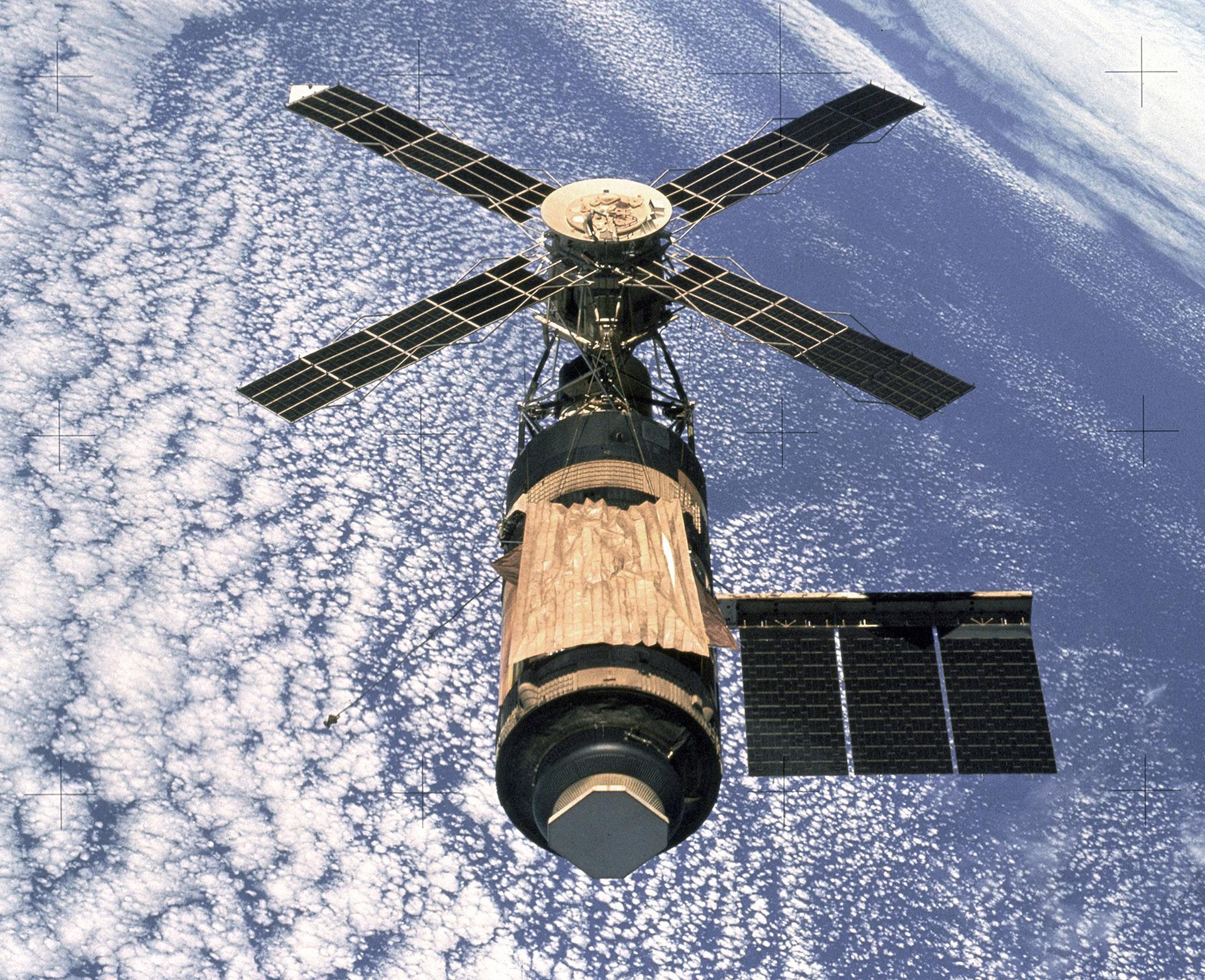
Skylab

Skylab

Stato: De-Orbited Orbita: Low Earth Orbit

Fondazione: 1973-05-14

Skylab was a United States space station launched and operated by NASA, and occupied for about 24 weeks between May 1973 and February 1974 – the only space station the U.S. has operated exclusively. In 1979 it fell back to Earth amid huge worldwide media attention. Skylab included a workshop, a solar observatory, and other systems necessary for crew survival and scientific experiments. It was launched unmanned by a modified Saturn V rocket, with a weight of 170,000 pounds (77,000 kg). Lifting Skylab into low earth orbit was the final mission and launch of a Saturn V rocket (famous for carrying the manned Moon landing missions). Three missions delivered three-astronaut crews in the Apollo command and service module (Apollo CSM), launched by the smaller Saturn IB rocket. For the final two manned missions to Skylab, a backup Apollo CSM/Saturn IB was assembled and made ready in case an in-orbit rescue mission was needed, but this backup vehicle was never flown.

NASA