Latest News

Stay updated with the latest events in spaceflight.

Latest News

Career Spotlight: Welder (Ages 14-18)
NASA

Career Spotlight: Welder (Ages 14-18)

What does a welder do? A welder uses tools that join two or more parts through forces such as heat or pressure. Metals are the materials most commonly used in welding, but it’s also possible to weld thermoplastics or wood. Welders use their hands, skills, and problem-solving abilities to create something new. At NASA, welders […]

Read More →
NASA’s SpaceX Crew-12 to Study Adaptation to Altered Gravity
NASA

NASA’s SpaceX Crew-12 to Study Adaptation to Altered Gravity

NASA’s SpaceX Crew-12 mission is preparing to launch for a long-duration science mission aboard the International Space Station. During the mission, select crew members will participate in human health studies focused on understanding how astronauts’ bodies adapt to the low-gravity environment of space, including a new study examining subtle changes in blood flow. The experiments, […]

Read More →
Hubble Spots Lens-Shaped Galaxy
NASA

Hubble Spots Lens-Shaped Galaxy

This new Hubble image, released on Jan. 30, 2026, is the sharpest taken of NGC 7722, a lenticular galaxy located about 187 million light-years away in the constellation Pegasus. A lenticular, meaning “lens-shaped,” galaxy is a type whose classification sits between more familiar spiral galaxies and elliptical galaxies. It is also less common than spirals and ellipticals — partly […]

Read More →

Upcoming Launches

View All →
Launch in Flight

Soyuz 2.1b/Fregat-M | Kosmos (Unknown Payload)

Russian Space Forces
Mission Type Government/Top Secret
Orbit Unknown
Pad Unknown Pad, Plesetsk Cosmodrome, Russian Federation
Go for Launch

Falcon 9 Block 5 | Starlink Group 17-33

SpaceX
Mission Type Communications
Orbit Low Earth Orbit
Pad Space Launch Complex 4E, Vandenberg SFB, CA, USA

Upcoming Events

View All →

Active Space Stations

View All →
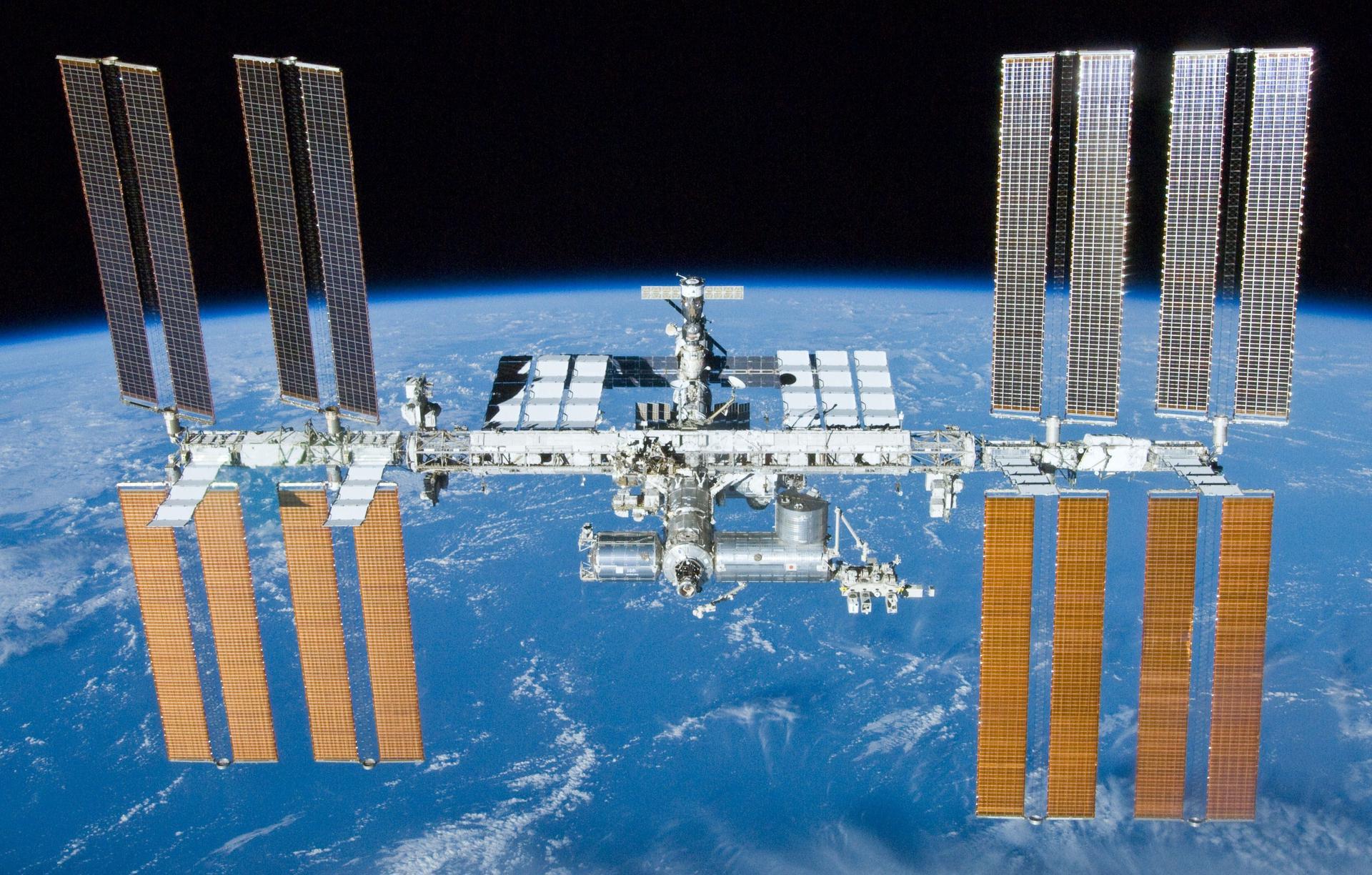
International Space Station

International Space Station

Status: Active Orbit: Low Earth Orbit

Founded: 1998-11-20

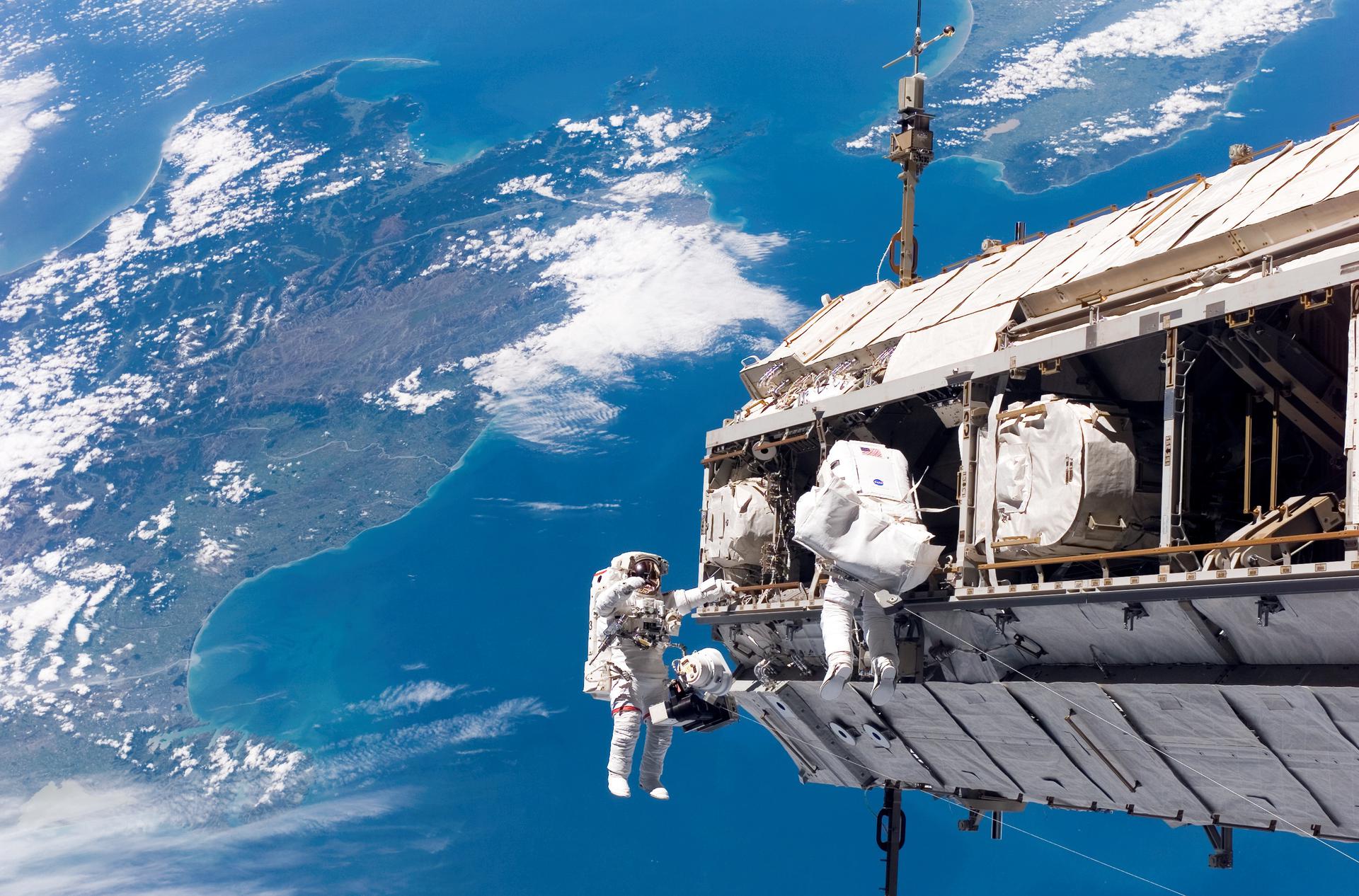
The International Space Station (ISS) is a space station, or a habitable artificial satellite, in low Earth orbit. Its first component was launched into orbit in 1998, with the first long-term residents arriving in November 2000. It has been inhabited continuously since that date. The last pressurised module was fitted in 2011, and an experimental inflatable space habitat was added in 2016. The station is expected to operate until 2030. Development and assembly of the station continues, with several new elements scheduled for launch in 2019. The ISS is the largest human-made body in low Earth orbit and can often be seen with the naked eye from Earth. The ISS consists of pressurised habitation modules, structural trusses, solar arrays, radiators, docking ports, experiment bays and robotic arms. ISS components have been launched by Russian Proton and Soyuz rockets, and American Space Shuttles.

CSAESAJAXANASARFSA
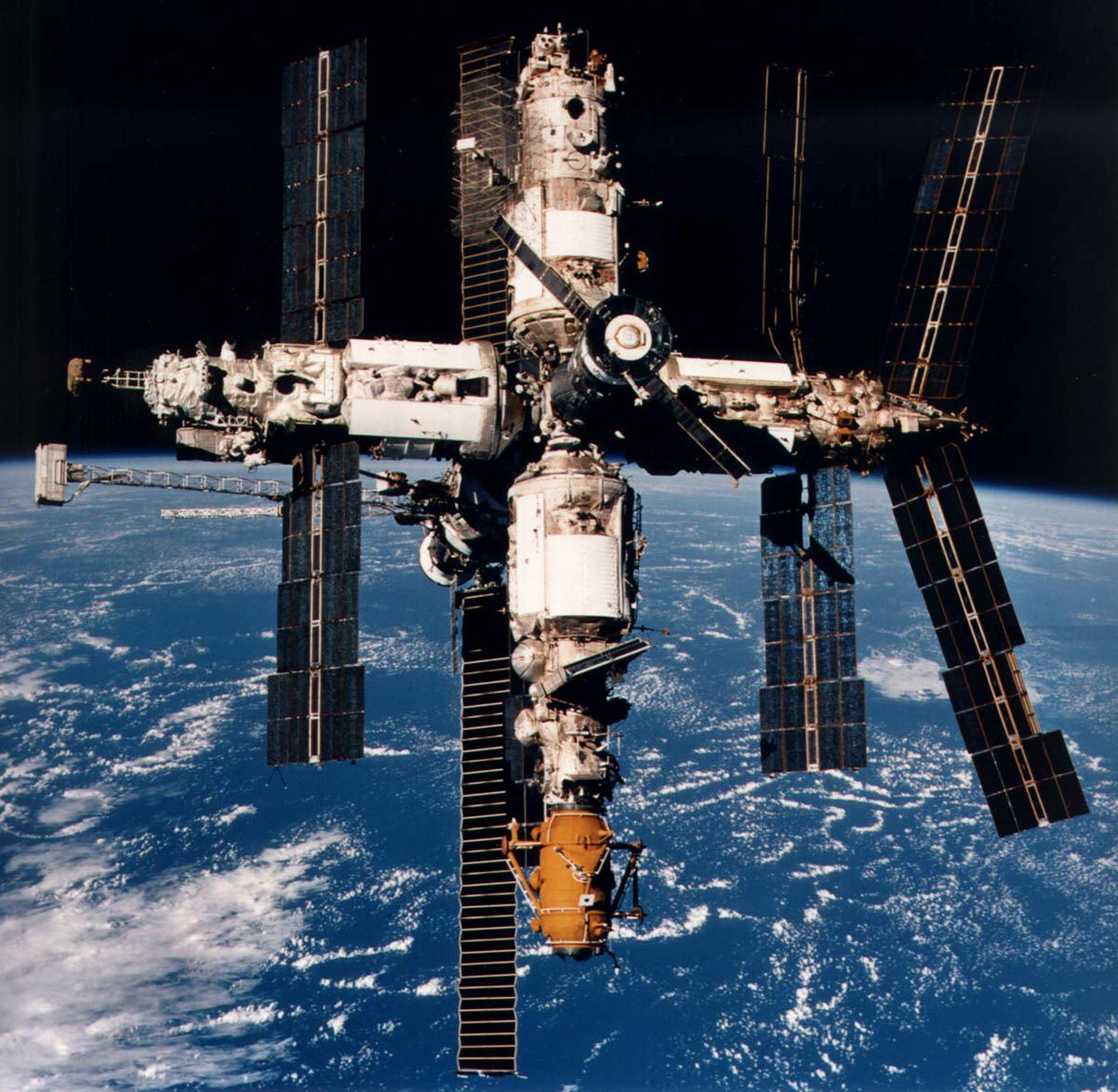
Mir

Mir

Status: De-Orbited Orbit: Low Earth Orbit

Founded: 1986-02-20

Mir was a space station that operated in low Earth orbit from 1986 to 2001, operated by the Soviet Union and later by Russia. Mir was the first modular space station and was assembled in orbit from 1986 to 1996. The station served as a microgravity research laboratory in which crews conducted experiments in biology, human biology, physics, astronomy, meteorology and spacecraft systems with a goal of developing technologies required for permanent occupation of space.

RFSA
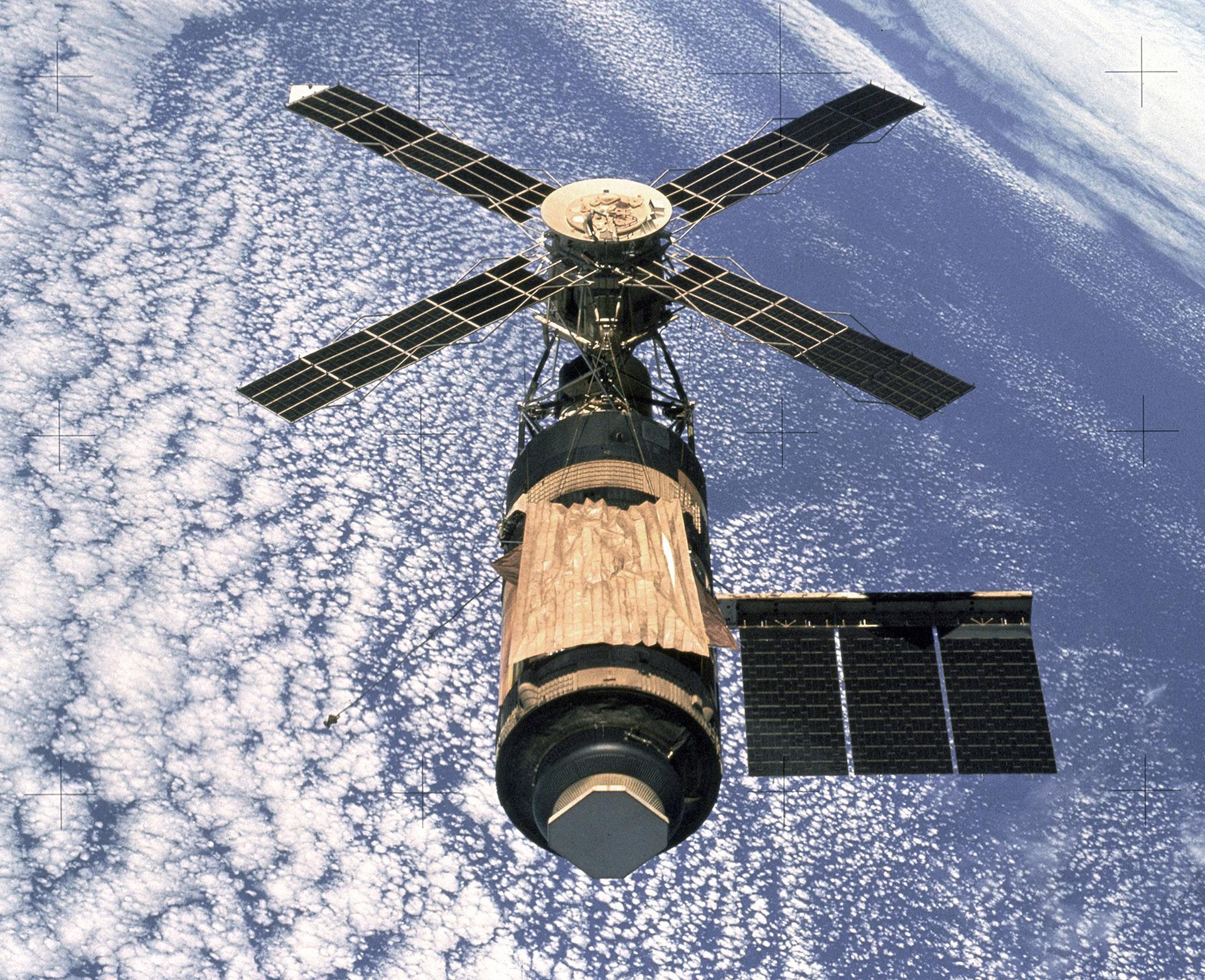
Skylab

Skylab

Status: De-Orbited Orbit: Low Earth Orbit

Founded: 1973-05-14

Skylab was a United States space station launched and operated by NASA, and occupied for about 24 weeks between May 1973 and February 1974 – the only space station the U.S. has operated exclusively. In 1979 it fell back to Earth amid huge worldwide media attention. Skylab included a workshop, a solar observatory, and other systems necessary for crew survival and scientific experiments. It was launched unmanned by a modified Saturn V rocket, with a weight of 170,000 pounds (77,000 kg). Lifting Skylab into low earth orbit was the final mission and launch of a Saturn V rocket (famous for carrying the manned Moon landing missions). Three missions delivered three-astronaut crews in the Apollo command and service module (Apollo CSM), launched by the smaller Saturn IB rocket. For the final two manned missions to Skylab, a backup Apollo CSM/Saturn IB was assembled and made ready in case an in-orbit rescue mission was needed, but this backup vehicle was never flown.

NASA